Origins & Education
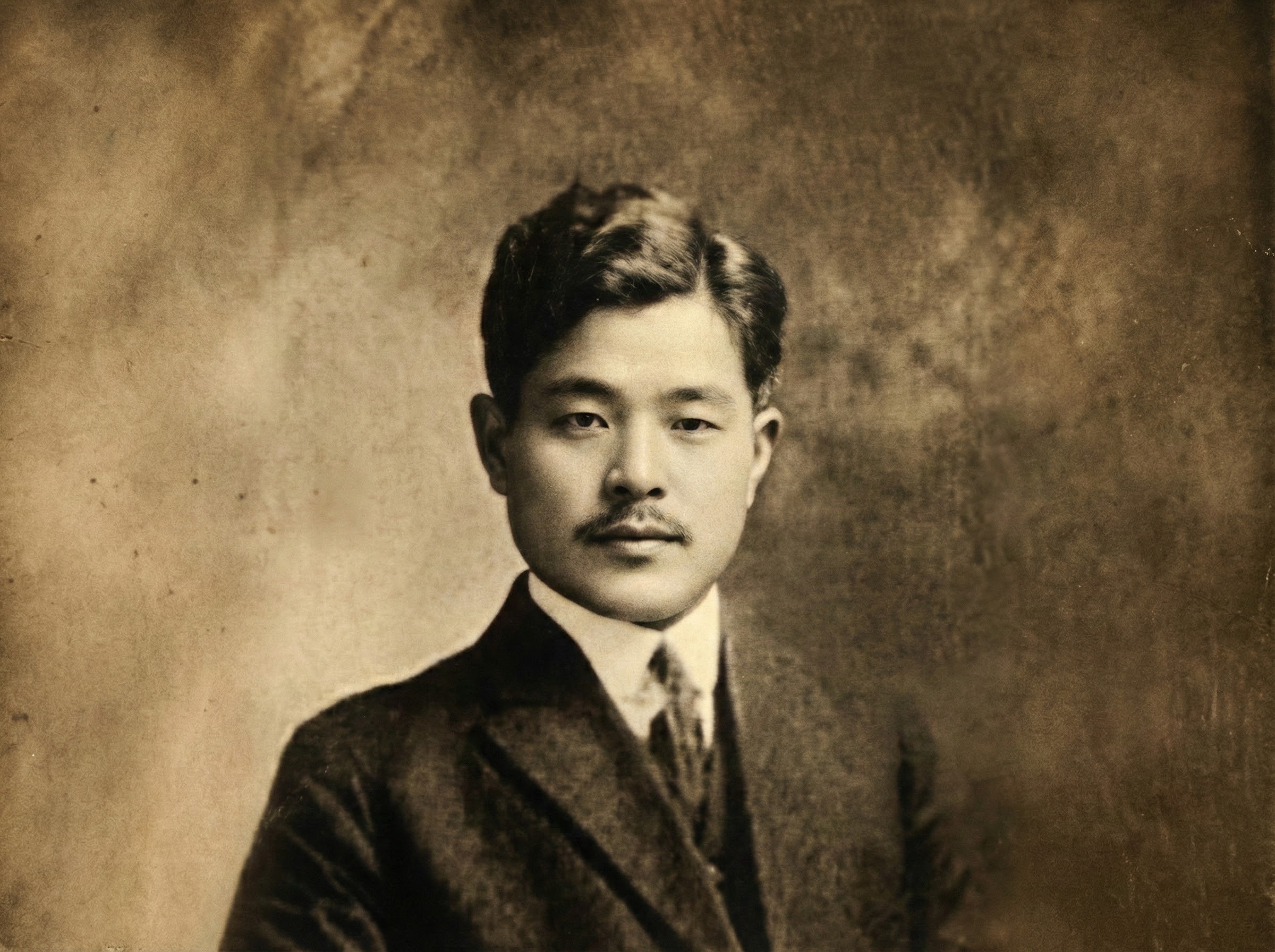
Tamotsu reported completing Uyeda grade and high school in Nagano (13 years) and then attending Tokyo Foreign Language School for 2 years to study English. That education would prove essential to his survival in America.
The Journey to America
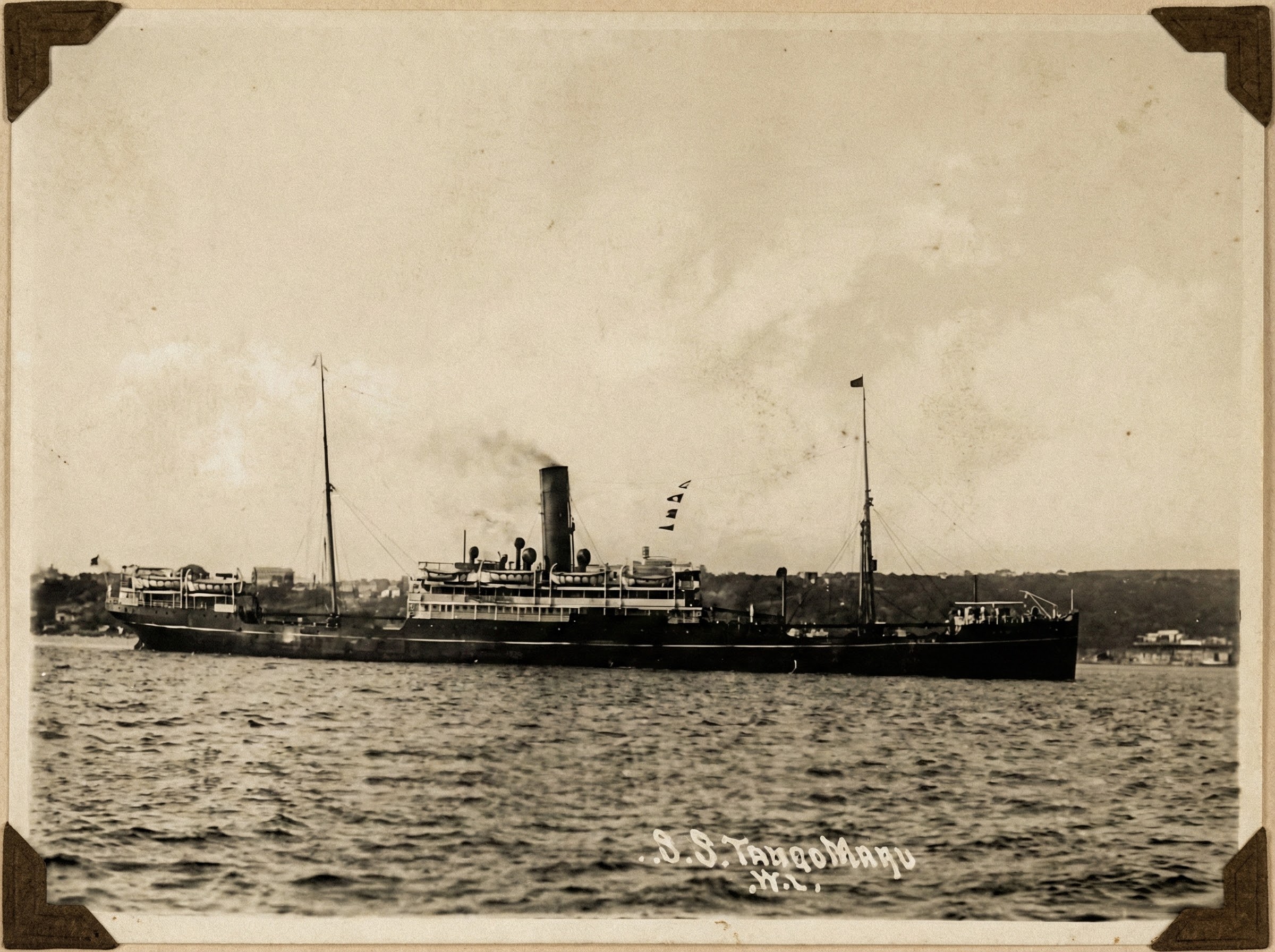
In early 1907, Tamotsu arrived in Seattle as a student on a Nippon Yusen (NYK) ship. His 1942 DOJ questionnaire lists his first U.S. entry as January 24, 1907 at Seattle, traveling on an NYK Line vessel; earlier research cites a March 1907 Tango Maru manifest, so the exact ship and date differ by source. He was 24 years old, fluent in English, unusual for a Japanese man of his era.
According to Raymond's 2006 oral history, Tamotsu had been carrying dreams of attending Cambridge University, but those dreams died somewhere in steerage. Raymond recounts that Tamotsu had a gambling problem and lost all of his money on the ship. Stranded in Seattle with nothing, he was forced to find work immediately, taking jobs as a houseboy and laborer.
His English fluency, intended for academic pursuits, became his greatest survival asset. He worked as a foreman for railroad and logging crews, managing Japanese laborers who couldn't navigate American bureaucracy. DOJ records show that he departed Seattle on December 10, 1916 aboard the Manila Maru, married Mine Takehana in Japan on May 10, 1917, and re-entered Seattle on July 14, 1917 on the Manila Maru as a permanent resident.
The 1916-17 trip to Japan wasn't just for marriage. In a January 1942 interrogation, Tamotsu told FBI agents he had returned to Japan in 1916 for eighteen months, and his father Takesaburo died in 1917. The timing lines up: he went home to be with his dying father, settled the family's affairs, married Mine Takehana while he was there, and returned to Seattle as a permanent resident. It was the trip of a dutiful eldest son, handling everything at once before the long voyage back.
The Name Change Question
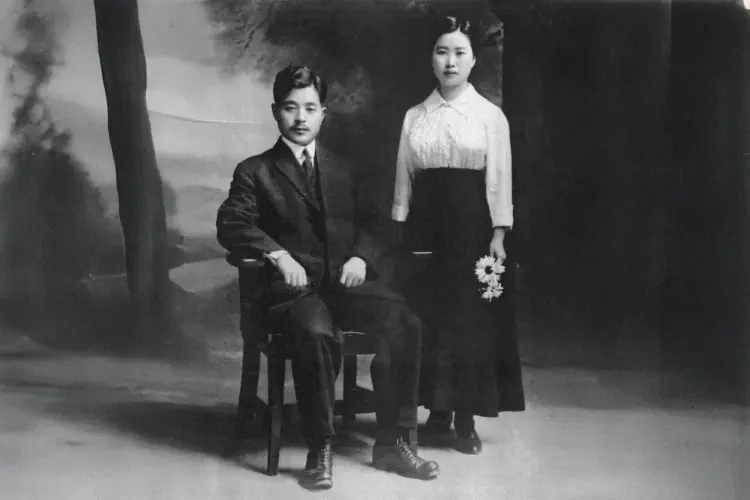
In his 2006 oral history, Raymond stated that his father's "original name was Shimizu" and that he changed it to Takisaki through muko-yōshi, adoption into a wealthy rice-farming family. While every U.S. record shows the surname Takizaki/Takisaki, the new research into Nagano surname distributions (detailed above) now provides strong circumstantial support for Raymond's account, likely placing the adoption one or two generations before Tamotsu.
Why "Takizaki" Became "Takisaki"
Raymond's obituary in the Northwest Asian Weekly states it plainly: his father was "Tomotsu S. Takizaki (the spelling of the surname was later changed)."
The reason is a Japanese phonological rule called rendaku (連濁). In compound words, the initial consonant of the second element sometimes becomes voiced: saki (崎) becomes zaki. It's why 山崎 can be read either Yamazaki or Yamasaki; same kanji, different pronunciation. The family's confirmed kanji is 瀧崎 (using the traditional character 瀧 for "waterfall" and 崎 for "cape" or "promontory"). The standalone reading of 崎 is "saki"; with rendaku applied in the compound, it becomes "zaki."
The shift from Takizaki to Takisaki likely happened for practical reasons in America: English speakers found "saki" easier than "zaki," the voicing distinction was unfamiliar to American ears, and the family may have preferred the softer sound. The FBI's own 1956 report already used the spelling "Takisaki," suggesting the change was well underway by then.
The Bellevue Years
He lived and farmed in the Bellevue area from September 1910 to March 1927, working with fellow Nagano immigrant Keigo Yamagiwa and developing a strawberry farm. His DOJ employment records describe roughly 15 years of farming at Bellevue (1909–1924). He cleared land and grew strawberries at what is now 112th SE & SE 24th Street.
Seattle Business & Kendo
From September 1927 to April 1942, Tamotsu and his family lived at 320 12th Avenue, Seattle, near Seattle University. In Seattle, Tamotsu operated Garden Grocery at this same address, on Capitol Hill. His DOJ questionnaire describes roughly 15 years in the grocery business (about 1925–1940), after which he retired in September 1940.
He later made a brief visit to Japan in 1937, departing on the Hikawa Maru and returning to Seattle on the Heian Maru on September 5, 1937. His community legacy, though, rested on martial arts.
Mine, Miyoko & the Takehana Family
Both of Tamotsu's wives came from the Takehana (竹花) family, a name that traces to Takehana Village in Chiisagata County, the same district as Ueda. This wasn't coincidence. These were tightly networked farming communities where families knew each other across generations. A Takehana stationery business still operates in Ueda today.
When Mine died on July 5, 1936, after giving birth to her ninth child, Tamotsu, now 54 with eight children to raise, married her relative Miyoko. In Japanese tradition this practice was called jun'en-kon (sororate marriage), and it was both common and culturally respected. The reasons were practical: maintaining the alliance between families and ensuring continuity of childcare for the children who already knew the Takehana family as their own.
Some records suggest "Miyoko" may actually refer to daughter Mary Miyoko rather than a second wife. The James Taro Takisaki obituary identifies all nine children as "born to Tamotsu and Mineko." The koseki would clarify this definitively.